

Have Better Conversations with 5 Forgotten Skills
When was the last time you had a really good conversation? Who was it with? Why was it so great? Has it been a long time? Would you like to have better conversations more often?
I have conversations all the time. It’s kind of my job but one conversation with a friend stands out and it was a few months ago. It stands out because I was tired and feeling anti-social at a party. Introvert problems. But my old friend drew me out of my shell by asking questions and really listening. By the end we were both able to encourage each other.
I’ve had other good conversations with friends recently. I have my best conversations with my husband when we are on longer drives for some reason.
But have you found it harder to have conversations with people lately? Do you find yourself staring at each other, or maybe your phones, at a loss of what to say? Or do you find people cutting you short with yes or no answers? Would you like to have better conversations? If so, stick around.

The Reasons We Need to Have Better Conversations
Why are conversations so important? Why should we make the effort to have better conversations? Is it really important to talk face to face in the “communication age” when we have so many easier ways to get in touch?
Well, I’m betting you already know the answers to those questions. Having real conversations is important because it makes us feel closer to each other and conveys information in a more complete way than any email or text ever could. We need to make the effort to have better conversations because the better we are at talking to each other about problems, solutions, and our feelings the more we can achieve together.
Without conversations the world becomes very divisive. People only have their own opinions filling their minds and they become more and more biased, insular, and even prejudiced. Bad communication, or partial communication such as through social media and text messages, results in miscommunication, broken reputations, and worse.

This post contains affiliate links. As an Amazon Associate, I receive a small commission when you purchase through these links at no extra cost to you.
The Problems with Conversation Today
I recently read a book called Reclaiming Conversation: The Power of Talk in a Digital World by Sherry Turkle. In it she talks about how younger generations are losing the ability to have real conversations because they rely too much on digital “communication” or input.
A few instances of this include kids that don’t know what to talk about with their friends on the playground, families that fight via text message to keep their emotions from getting out of control, and college graduates that go to job interviews and say they are not comfortable answering the phone and will only communicate via email or chat.
Our conversational skills are disintegrating as quickly as our tech is advancing. We are used to stopping mid sentence to answer a text or having someone else do that to us. It seems totally normal to pause a great conversation in order to Google a fact. And when we do talk to each other Sherry Turkle notes a lack of empathy. People are used to watching people but not relating to them in real life so when something bad happens we don’t react like it’s really happening. Instead we mentally swipe to the next thing.
Isn’t that awful? It is scary to think of the world going silent, everyone losing their voice, but the good news is we all have the power to change it! Let’s start by remembering forgotten skills so we can have better conversations.

How to Have Better Conversations
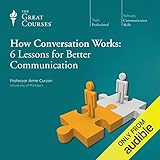
Another book I read recently will help us remember how to have good in person conversations. In her lecture series How Conversation Works: 6 Lessons for Better Communication, Anne Curzan shared all the basic building blocks and I’m going to share some of them with you.
1: Put Down Your Phone
The first tip for better conversations should be a no brainer but that doesn’t mean it’s easy to do. If you want to have better conversations you have to put down your phone. Just having a phone on the table cues to everyone there that they aren’t your priority and you will probably be distracted.
When our phones are present it affects the quality of the conversation too. People tend to keep topics lighter because they know that there will be interruptions and even though it feels like you are adding value when you look up a fact or a picture it actually destroys flow.
This may be the hardest thing you do on the path to better conversations but I promise it’s worth it. Put down your phone. Hide it! Give the gift of presence by paying attention to the people right in front of you.

2: Get Out on the Talk Floor
The next step in having better conversations is knowing how to start one. Some situations make that easy but others make it hard. For example, what do you do if you are trying to join a group of people you don’t know who are already talking? What if you are trying to meet someone new? What if you are meeting a friend of a friend but that friend isn’t standing right by you?
Well, you have to get out on the dance floor, or the talk floor. You have to do it in a way that makes it less awkward for yourself and everyone else. Anne Curzan suggests that you introduce yourself with context. Let them know more than your name. Include something like your place of work, who you know in common, or where you are from so that they can ask you about one of those things.
Once they have asked you about yourself, keep it open ended by answering and then asking them a similar question. Make your conversation collaborative by using your body language to show you are listening, curious, or agreeing.
Ways to avoid awkwardness include paying attention to how much you are talking in comparison to others, noticing whether or not your listeners are still engaged or starting to lose interest, and asking yourself if you are letting them express themselves enough. When you pay attention you will know when a conversation is naturally over. You will be dancing to the same tune as everyone else.

3: Learn When to Be Direct and When to Be Indirect
As you start to have better conversations you will realize that there is a fine line between the right time to use direct statements and when it would be better to be more indirect. This line is often the difference between being polite and rude so it’s important to know your moment.
Being polite involves thinking of other’s feelings and showing respect for their needs. If you are treating others as you would like to be treated you will not ask questions that are too personal but you will answer questions without being unnecessarily confusing. Your language will not include wording that sounds like commands but you will instead be more indirect in asking for things.
You can make people feel more comfortable by complimenting and commending them. You can ask questions about them with respect by using proper titles if they are older or in a higher position but you can use terms of comradery or first names if they are not.
Some great ways to make sure people respond well to you are to mirror their body language and tone, to give advice sparingly, and to show respect for their time by not expecting them to do more for you than they want to. Asking someone else for help with something they are good at is usually going to land well too.

4: Find Common Ground and Have an Open Mind
The next challenge to having conversations I see a lot of these days is that people are too closed minded, too ready to argue. They simply don’t know how to get along with other people.
Have you ever been asked for your opinion, shared it and then been snubbed because your opinion was different from the person who had asked for it. Isn’t that crazy? Shouldn’t you always assume that if you ask for someone else’s opinion it could be different from your own?
Instead of looking to argue we need to look for what we have in common and if we differ, we need to learn how to listen in a way that genuinely tries to see the other person’s reasons for their views.
In his book, The Next Conversation: Argue Less, Talk More, Jefferson Fisher gives great tips for getting along with almost anyone. He says that you should never try to win an argument because whenever you win an argument you most likely also lose the other person’s trust and respect. Instead, look for something to learn.
When you are trying to find common ground so you can understand a person it’s important to realize that the person you see isn’t the person you’re talking to. The person you see may seem rude or argumentative but the person you’re talking to is worried about caretaking for their aging parent, paying the bills, or helping their kids with a bully. Ask questions to open them up and show empathy. Soon you will be having a better conversation and finding real solutions.
What if someone’s opinions differ with you and you can’t find anything to agree on? That’s ok. You can still show them respect and thank them for sharing.

5: Learn How to Have Hard Conversations
Well there you have it. Now you know how to have better conversations! But wait. What about the hard conversations? The ones that make you angry? The ones you dread. What about those people who always get under your skin and that boyfriend you need to break up with? Suddenly texting your arguments and breakups sounds like a good idea.
It is not a good idea. It’s a terrible idea and here’s why. Jefferson Fisher says that those difficult conversations are your best chance to learn something and connect. Difficult conversations are on the path to every big change in your life and the world and a conversation by text isn’t a conversation at all. It’s just a transmission of information. And before you take the other out, no, ghosting is not an option. It’s just a sure fire way to save the problem for later.
So what do you do? Well, it’s simple. You take a breath before you say one word. While you take that breath you scan your body to see where the tension is rising and you acknowledge the feelings you are having. During that breath you are calming down and they are hearing what they’ve said. Then, before you say even one word you need to give yourself a tiny pep talk to remind yourself of your values. Tell yourself something like “be kind”, “listen to learn”, “you are ok”. The focus is to cool the fire within you so you can react wisely.
It is perfectly alright to tell the person that you are feeling upset and will need time to cool down before you talk. It’s optimal to set a specific time for difficult conversations. And it’s best to be clear about what your boundaries are and what you want to achieve by the end of the conversation instead of beating around the bush.

Keep Working On Better Conversations!
As you can see, having better conversations takes a lot of work. You have to be patient, kind and humble to be polite. You need to think about your words before you say them and most of all you need to be willing to open up to others.
There are so many more tips in the books I mentioned! I highly recommend reading them for yourself. You may find Reclaiming Conversation: The Power of Talk in a Digital World by Sherry Turkle the most helpful if you are a teacher or if your interested in the social ramifications of the change in communication. How Conversation Works: 6 Lessons for Better Communication by Anne Curzan will be especially interesting if you anticipate meeting a lot of new people soon. And finally The Next Conversation: Argue Less, Talk More by Jefferson Fisher will be super helpful if you have difficult conversations coming up or if you need to be more persuasive.


I really hope this post inspired you to have better conversations, the type of conversations you remember months later. I hope those conversations help you understand someone, touch your heart, and maybe even change your mind! The ability to share our human experience is one of the best gifts we have in this happy simple life so don’t forget to use it.